


Plate Processing Company
Flame Cutting vs Plasma Cutting in Houston: Which Is Better for Thick Steel Plates?
Flame Cutting vs Plasma Cutting in Houston: Which Is Better for Thick Steel Plates?
If you're sourcing thick steel plate cutting in Houston, you've probably run into this question more than once: flame cutting or plasma cutting? Both methods work. Both are widely used. But they are not the same, and choosing the wrong one for your project can cost you time, money, and material. This guide breaks down plasma cutting vs flame cutting in Houston so you can walk into your next procurement conversation with confidence.
How Flame Cutting Works
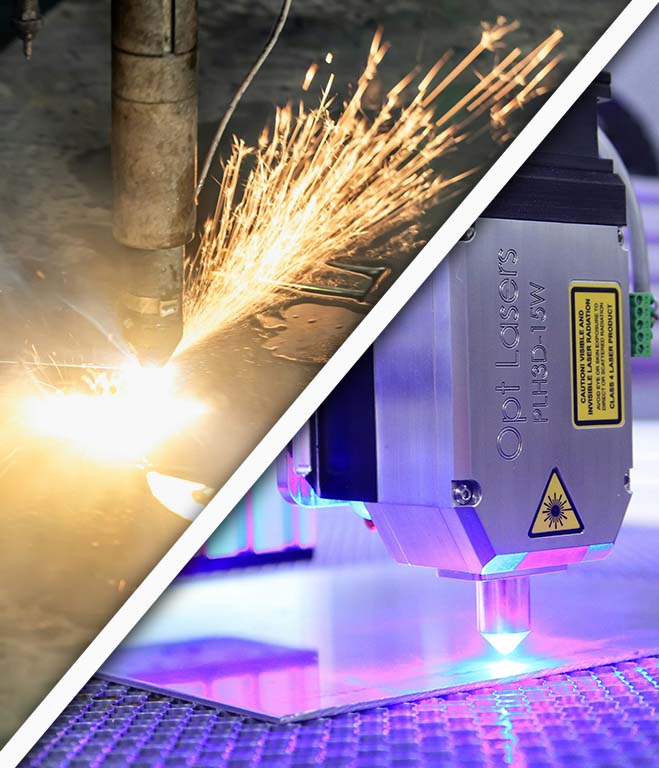
Flame cutting, also called oxy-fuel cutting in Houston, uses a combination of oxygen and a fuel gas, usually acetylene or propane, to heat steel to its ignition point. Then a high-pressure stream of oxygen burns through the metal.
It's a method that has been around for over a century. And it's still one of the most reliable options for heavy plate fabrication in Houston.
Flame cutting works best on:
- Carbon steel plates over 1 inch thick
- Very heavy sections, sometimes up to 12 inches or more
- Large structural parts where extreme precision is not the top priority
The equipment is relatively low cost, and the method handles very thick material with ease. That's why it remains a go-to for industrial plate processing in Houston across oil and gas, construction, and shipbuilding.
How Plasma Cutting Works
Plasma cutting uses an electrically charged gas, usually compressed air or argon, to generate a high-temperature plasma arc. That arc melts through the metal at high speed.
Plasma plate cutting services are faster than flame cutting for most steel thicknesses. The cuts are cleaner, and the heat-affected zone is smaller. This matters when you're working with tight tolerances or when the cut edge needs minimal finishing.
Plasma cutting works best on:
- Carbon steel, stainless steel, and aluminum
- Plates generally under 2 inches thick, though some systems go higher
- Projects where precision steel cutting in Houston is a priority
- High-volume runs where speed matters
Differences Between Flame Cutting and Plasma Cutting You Need to Know
Here's a side-by-side look at the two methods – flame and plasma cutting:
Material Thickness – Flame cutting handles extreme thicknesses better. For plates above 3 inches, oxy-fuel cutting in Houston is often the more practical choice. Plasma starts to lose efficiency and cut quality as thickness increases beyond 2 to 2.5 inches on most systems.
Cutting Speed – Plasma wins on speed for thinner materials. It moves faster and produces less slag. Flame cutting is slower but more consistent on very heavy sections.
Cut Edge Quality – Plasma produces a smoother, more precise edge with less post-cut cleanup. Flame cutting can leave a rougher edge that may need grinding or machining, depending on your application.
Heat-Affected Zone – Both methods create a heat-affected zone (HAZ) around the cut. Plasma's HAZ is narrower because the process is faster. Flame cutting's slower burn creates a wider HAZ, which can affect material properties near the cut edge.
Material Type – This is a big one. Flame cutting only works on carbon steel and low-alloy steel. Plasma cutting handles a wider range, including stainless steel and aluminum. If your project involves stainless or non-ferrous metals, plasma is your only option between the two.
Cost – Flame cutting equipment is cheaper to run. For thick carbon steel where precision is less critical, it's the more economical method. Plasma carries higher equipment and operating costs but delivers better precision, which can reduce downstream machining costs.
Which Is Better for Thick Steel Plates – Flame Cutting or Plasma Cutting?
For very thick carbon steel plates, generally above 2 to 3 inches, flame cutting is usually the stronger choice. It handles the thickness reliably, the operating costs are lower, and the process is proven across decades of heavy industrial work.
For precision steel cutting in Houston on thicker plates where edge quality and tolerances matter, plasma is worth the investment. Modern high-definition plasma systems can cut up to 3 inches with excellent results.
The honest answer is that the right method depends on:
- Your material type (carbon steel vs stainless or other alloys)
- The thickness of the plate
- The tolerance requirements for your application
- Your volume and timeline
A good industrial plate processing partner in Houston will assess your project specs before recommending a method. If someone pushes one option without asking about your material and tolerances, that's a sign to ask more questions.
What Houston Industries Use Flame and Plasma Cutting Methods For
Heavy plate fabrication in Houston spans multiple industries, and you'll find both cutting methods in use across all of them.
Petrochemical and refinery plants use both methods for pressure vessel components, structural supports, and equipment bases.
Construction and structural fabrication shops rely heavily on flame cutting for large carbon steel sections.
Shipbuilding and offshore fabrication often need plasma cutting for cleaner edges on mid-thickness plates.
Manufacturing operations use plasma more frequently for its speed and versatility across material types.
How to Choose the Right Metal Plate Cutting Partner
When you're evaluating plate cutting services in Houston, look for a shop that:
- Operates both flame and plasma cutting equipment
- Can advise you on the right method based on your specs
- Has experience with your industry's requirements
- Provides traceability and material certifications
- Offers secondary services like beveling, leveling, and sawing to reduce your vendor count
A full-service industrial plate processing company saves you logistics headaches and gives you one point of contact from raw plate to finished part.
Final Thoughts
Flame cutting vs plasma cutting in Houston isn't a competition. It's a question of fit. Both methods serve Houston's industrial base well, and knowing which one applies to your project makes procurement faster and results better.
If you're working with thick carbon steel and tight budgets, flame cutting method for metal in Houston is the ideal choice. If you need precision, speed, or material flexibility, plasma is the better tool.
Work with a plate cutting partner who understands both, and you'll get the right process for your plate, every time.
Frequently Asked Questions
Can flame cutting be used on stainless steel plates?
No. Flame cutting, also called oxy-fuel cutting, only works on carbon steel and low-alloy steel. The process relies on the oxidation of iron, which does not occur the same way in stainless steel. For stainless steel plate cutting, plasma cutting or laser cutting are the appropriate methods.
What is the maximum thickness plasma cutting can handle?
Most standard plasma systems cut carbon steel up to 1.5 to 2 inches effectively. High-definition plasma systems can cut up to 3 inches with good quality. Beyond that, flame cutting generally produces more consistent results and is more cost-effective for very heavy sections.
Do I need to specify a cutting method when requesting a quote?
You don't have to. A good metal plate cutting shop will ask about your material type, thickness, tolerance requirements, and end-use application, then recommend the appropriate method. If you have specific requirements from engineering or quality specs, share those upfront to get the most accurate recommendation.